TECHNICAL PROGRAM
Technical Program & Schedule
Explore the timeline of events, technical sessions, and our distinguished lineup of Keynote Speakers at MWSCAS 2026.
Schedule At-A-Glance
- Tutorials (All Day)
- Special Sessions
- Welcome Reception (6:00pm - 8:00pm)
- Opening Ceremony
- Keynote 1: Dr. Kaushik Sengupta
- Technical Sessions
- Student-Industry Forum (12:00pm)
- Keynote 2: Swarup Bhunia, Ph.D.
- Technical Sessions
- Poster Sessions
- Conference Banquet (6:30pm)
- Keynote 3: Dr. Grzegorz Deptuch
- Keynote 4: Dr. Prashant Majhi
- Technical Sessions (Half Day)
- Closing Ceremony
Keynote Speakers
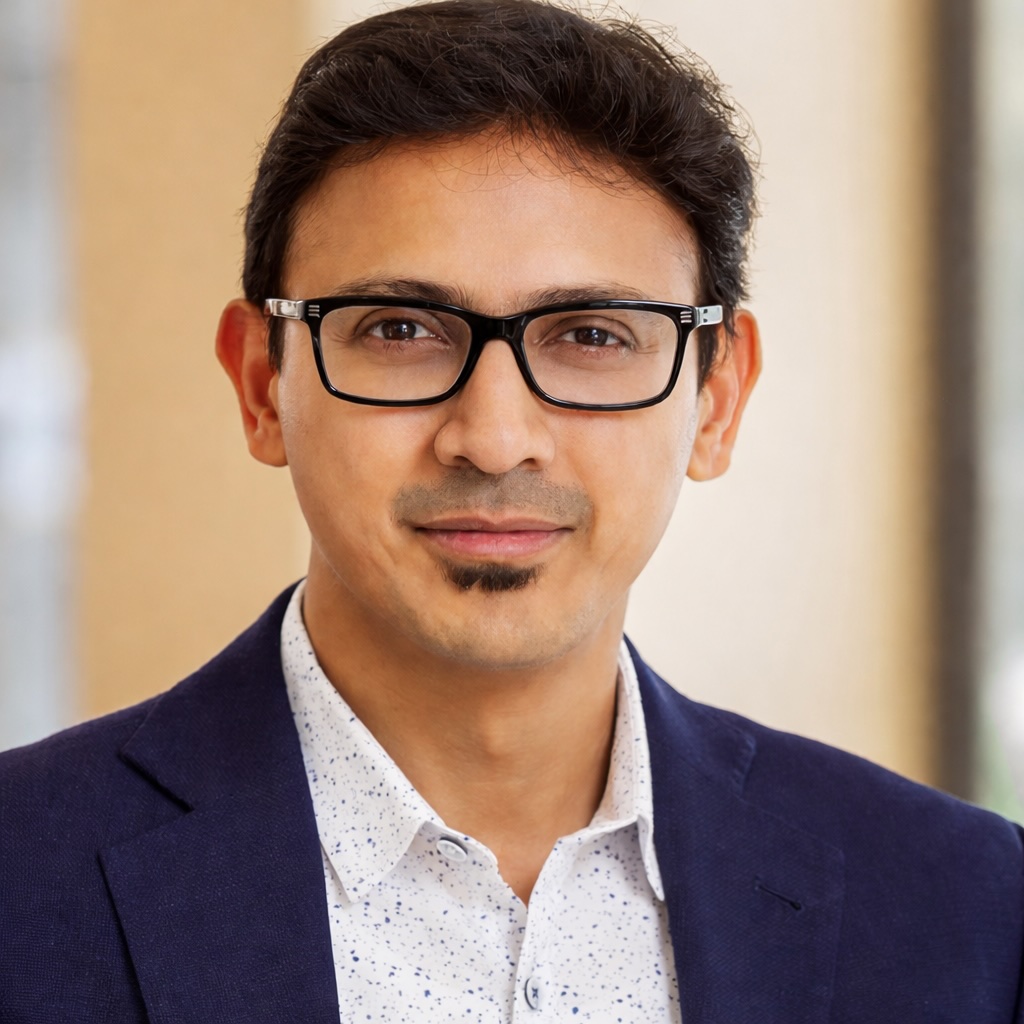
Dr. Kaushik Sengupta
Professor, Princeton University
Keynote 1: AI-enabled Chip (RF) Design beyond Human Intuition
Dr. Kaushik Sengupta
Professor, Princeton UniversityKeynote 1: AI-enabled Chip (RF) Design beyond Human Intuition
Abstract
Traditionally, chip-scale RF system design has been in the domain of the expert, dominated by thumb rules and trial and error techniques. Designing these ICs, that form the bedrock of the wireless networks, is complex, time-consuming, requires years of expertise, and therefore, can be very expensive. Historically, the design process of RF IC design has relied on intuition based approaches with standard templates that are subsequently optimized, time-consuming parameter sweeps, or ad-hoc population-based metaheuristic optimization methods. There is no reason to believe that this approach is optimal in any sense. This talk will discuss how inverse design with AI-based approaches can open a new design space and allow rapid designs on demand. It will discuss deep-learning based modeling and generative AI approaches, that are transferrable across process design technologies, for inverse design and automated synthesis of mmWave/sub-THz circuits and antennas.
Bio
Dr. Sengupta is an IEEE Fellow and currently Professor in the department of Electrical and Computer Engineering at Princeton University. He received a B.Tech/M.Tech (dual degree) in Electronics and Electrical Communication Eng. from the Indian Institute of Technology, Kharagpur, in 2007, an M.S. in Electrical Engineering from Caltech in 2008, and a Ph.D. in Electrical Engineering from Caltech in 2012. His research interests include novel chip-scale architectures for intelligent sensing and communication for a wide range of emerging applications.
He received the DARPA Young Faculty Award in 2018, the Bell Labs Prize in 2017, the Young Investigator Program Award from the Office of Naval Research in 2017, the Prime Minister Gold Medal Award from IIT Kharagpur in 2007, the Charles Wilts Prize at Caltech for the best Electrical Engineering Ph.D. thesis in 2013, and the inaugural Young Alumni Achievement Award from IIT Kharagpur in 2018. He served as a Distinguished Lecturer for the IEEE Solid-State Circuits Society from 2019 to 2020 and for the IEEE Microwave Theory and Technology Society from 2021 to 2023. He is a recipient of the 2021 IEEE Microwave Theory and Technology Outstanding Young Engineer Award and the 2022 IEEE Solid-state Circuits New Frontier Award. He received the IEEE Microwave Prize in 2015, several best paper awards including IEEE IMS (2020, 2021, 2022, 2025), RFIC (2012), and the Best paper of the year award from IEEE Journal of Solid-State Circuits in 2023 for the first deep-learning enabled RFIC design. He has over 20+ patents, and his work led to the start-up on long-distance wireless power transmission called Guru Inc, based in California, in which he has served as an advisor.
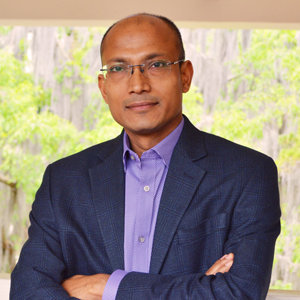
Swarup Bhunia, Ph.D.
Semmoto Endowed Chair Professor of IoT, Electrical and Computer Engineering, University of Florida
Keynote 2: Hardware Security 2.0: An AI-Enabled Future
Swarup Bhunia, Ph.D.
Semmoto Endowed Chair Professor of IoT, Electrical and Computer Engineering, University of FloridaKeynote 2: Hardware Security 2.0: An AI-Enabled Future
Abstract
With the emergence of the Internet of Things (IoT) regime that promises exciting new applications from smart cities to connected autonomous vehicles, security of edge devices has come to the forefront of the system design process. Recent discoveries and reports on numerous security attacks on microchips and circuits violate the well-regarded concept of hardware trust anchors. The current business model and the supply chain ecosystem for microelectronics give rise to unprecedented security issues and accentuate the need for secure, trustworthy hardware. It has prompted system designers to develop novel security primitives, design-for-security, and test/validation solutions to achieve secure hardware for diverse IoT applications. Emerging security issues and countermeasures have also led to an interesting interplay between security and verification. Verification of hardware for security and trust has become an integral part of the system design flow. The talk will cover a spectrum of challenges associated with hardware security and describe emerging solutions in creating secure, trustworthy hardware that can enable IoT security for the mass. It will outline the need and challenges for verification of an electronic design's security properties and the motivation for learning-guided security design and verification. Finally, it will outline how AI-driven assurance of hardware, specifically the usage of generative AI, is creating a promising new paradigm of hardware-centric IoT security.
Bio
Dr. Swarup Bhunia is currently a preeminence professor of cybersecurity and Semmoto Endowed Chair Professor of Internet of Things (IoT) at the University of Florida. He serves as the Director of the Warren B. Nelms Institute for the Connected World. Earlier, he was appointed as the T. and A. Schroeder Associate Professor of Electrical Engineering and Computer Science at Case Western Reserve University. He has over twenty years of research and development experience, with 10 authored or edited books, over 350 publications in peer-reviewed journals and premier conferences, and 40 granted patents. His research interests include hardware security and trust, adaptive nanocomputing, and novel test methodologies.
Dr. Bhunia has received the IBM Faculty Award, National Science Foundation CAREER Award, Semiconductor Research Corporation Inventor Recognition Award, IEEE HOST Hall of Fame Award, University of Florida Research Foundation Professorship Award, SRC Technical Excellence Award as a team member, and several best paper awards and nominations. He is co-founding editor-in-chief of a Springer journal on hardware and systems security. Dr. Bhunia received his Ph.D. from Purdue University for research on energy-efficient and robust electronics. He is a Fellow of the IEEE.
Dr. Grzegorz Deptuch
Brookhaven National Laboratory
Microelectronics Instrumentation
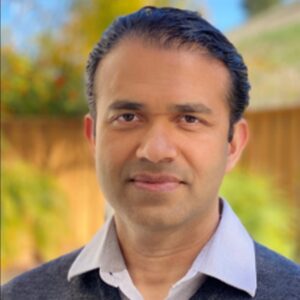
Dr. Grzegorz Deptuch
Brookhaven National LaboratoryMicroelectronics Instrumentation
Abstract
Abstract coming soon.
Bio
Bio coming soon.
Dr. Prashant Majhi
Intel Corporation
Semiconductor R&D
Dr. Prashant Majhi
Intel CorporationSemiconductor R&D
Abstract
Abstract coming soon.
Bio
Bio coming soon.